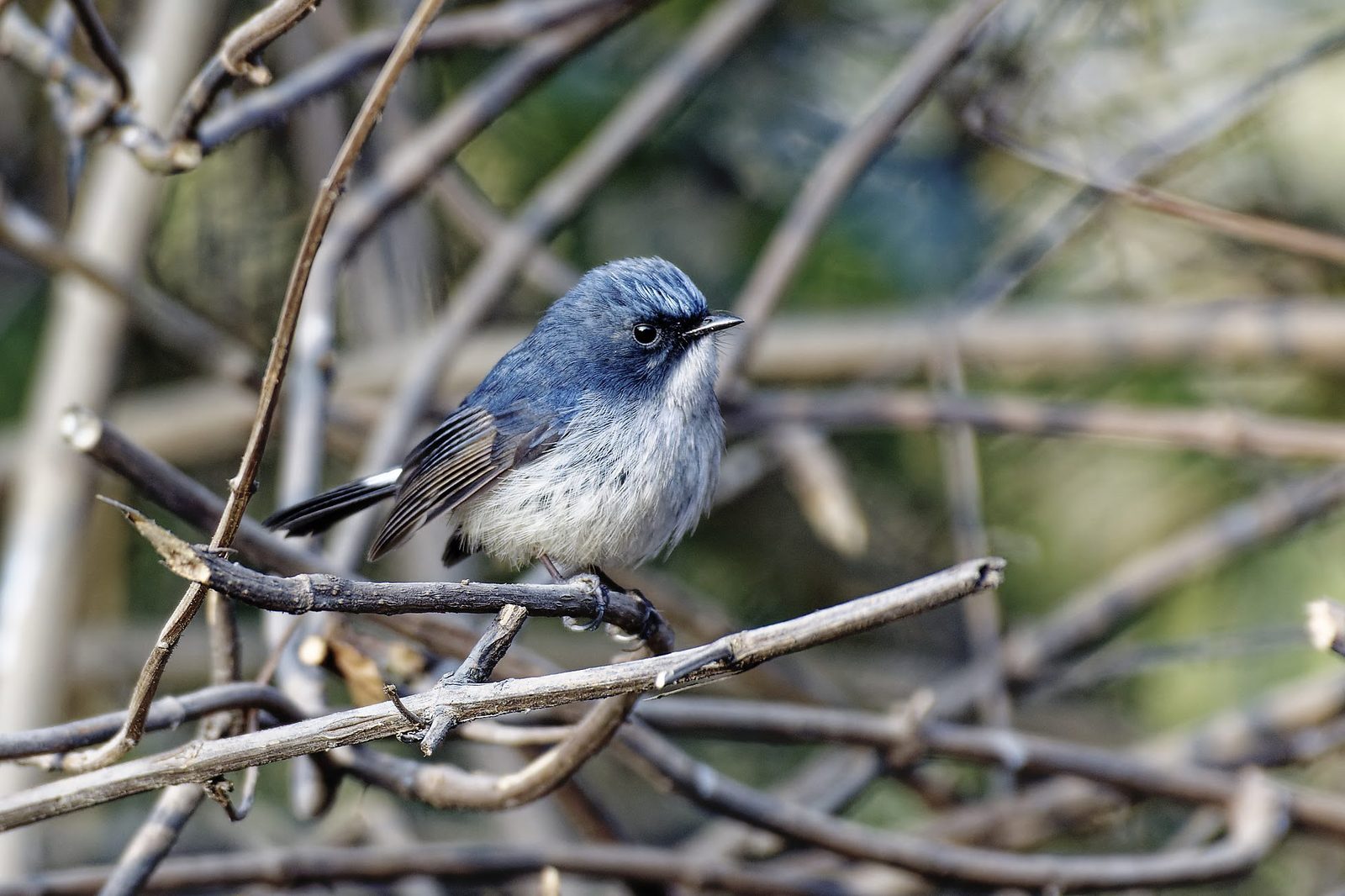
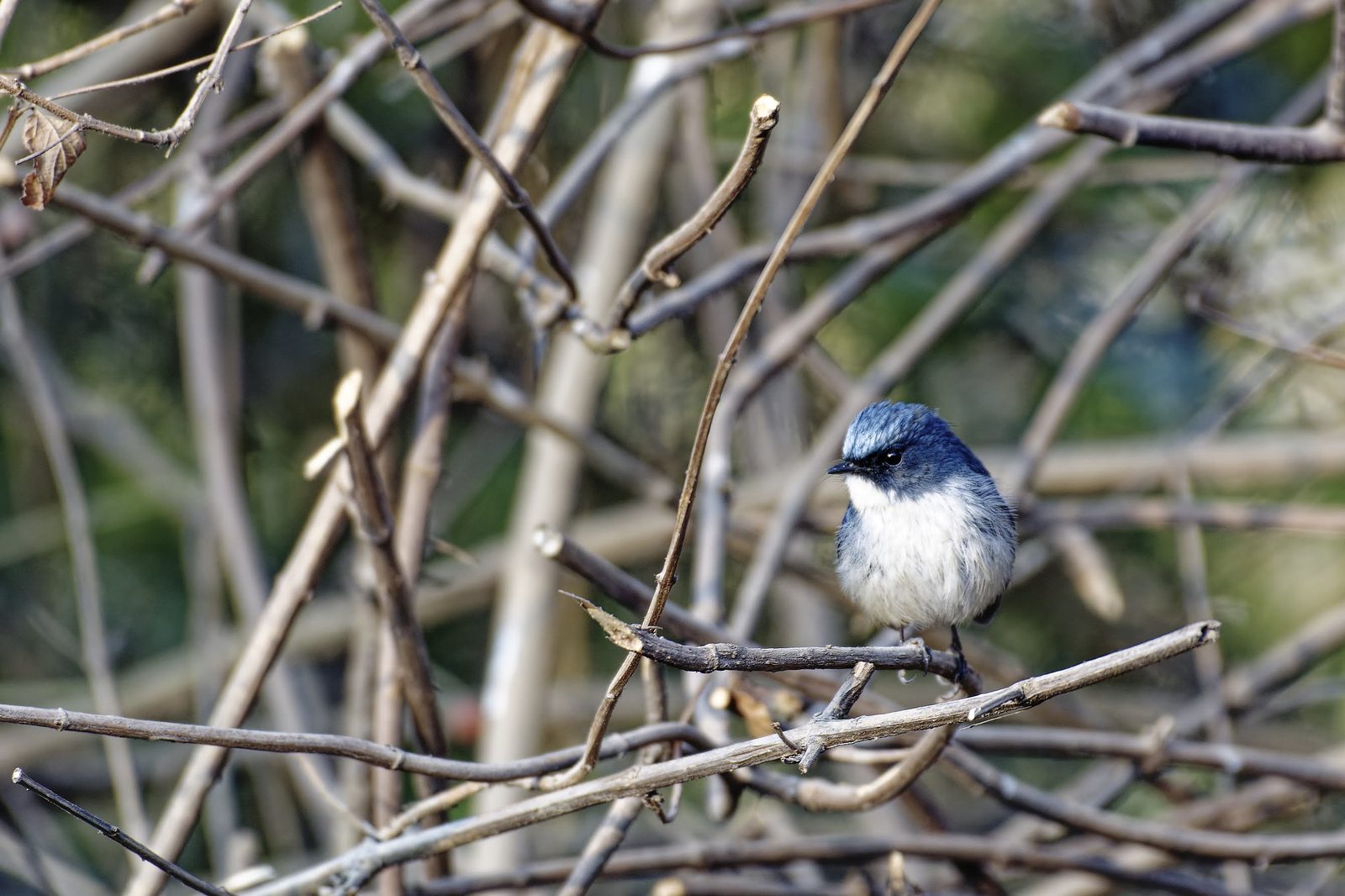
Himalayan Flycatchers
Eumyias thalassinus, Ficedula superciliaris, Ficedula tricolor
Several flycatchers breed in or pass through the Naukuchiatal hills. The Verditer Flycatcher is a uniform soft copper-blue, the Ultramarine Flycatcher is deep blue above and white below, and the male Slaty-blue Flycatcher is slaty-blue above with an orange throat and breast.
Species Ecological Profile
Sourced from high-confidence eBird and regional field surveys
Open temperate oak and mixed coniferous forests, forest edges, orchards, and wooded lakeside gardens. Prefers exposed branches in the upper canopy to hunt from.
Exclusively insectivorous. Feeds on flying gnats, moths, midges, and winged ants, captured through swift, incredibly agile aerial loops (sallying) from prominent lookout twigs.
Summer visitors or altitudinal migrants. They arrive in the hills in spring to breed and move to lower, warmer ground in the cold months.
April to July. Nests in natural tree cavities, old holes in stone walls, or mossy banks, building a soft cup made of green moss, rootlets, and animal hair.
Flycatchers are seen at forest edges, wooded gardens and lake margins in the warmer months, hunting from exposed perches.
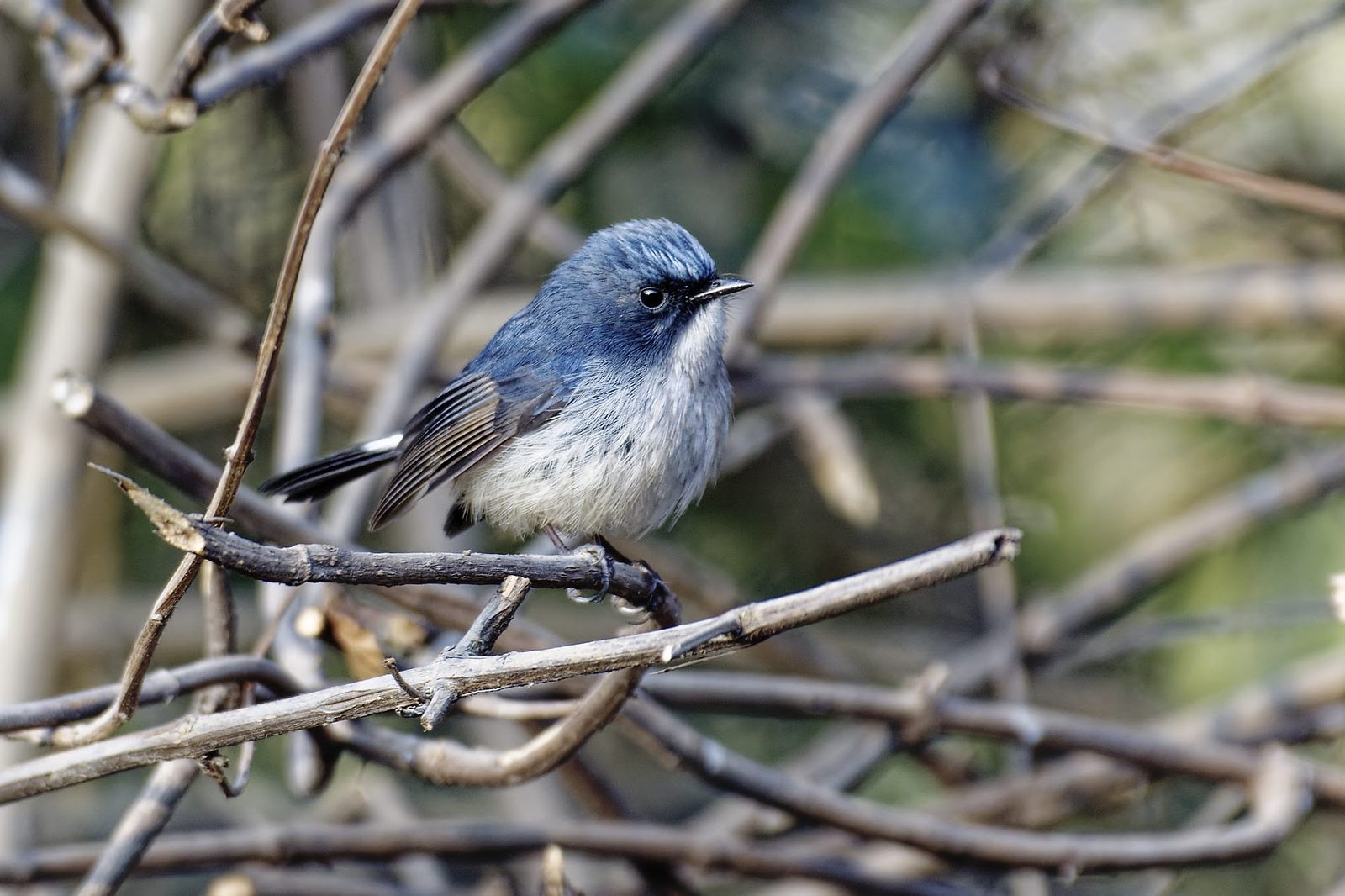
Photographic Log
Visual field records captured in Naukuchiatal (Click to enlarge)